


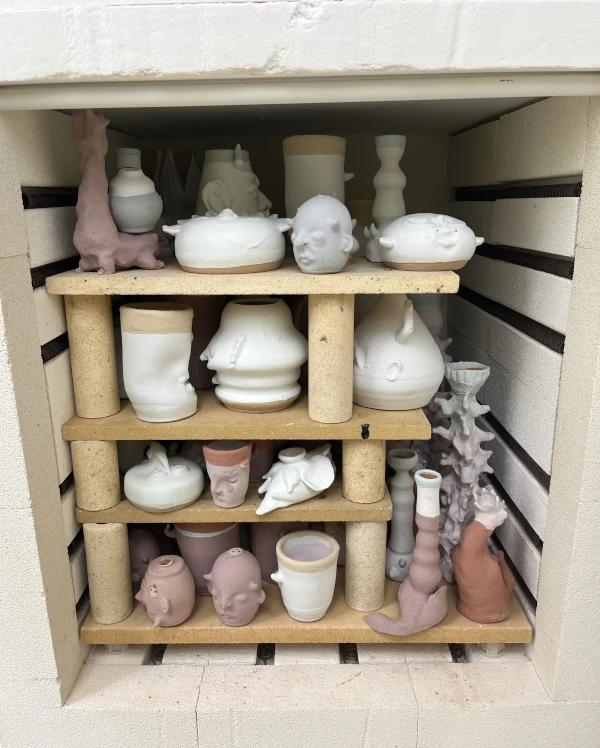
Trial and Error in Sculpture and Ceramics: A Path to Discovery
There’s a quiet kind of bravery in working with clay — the willingness to shape something that might collapse, crack, or completely surprise you. In the world of sculpture and ceramics, trial and error isn’t just part of the process; it is the process. It’s how we learn, grow, and ultimately discover who we are as artists.
Unlike many traditional art forms that rely on precision or planning, ceramics asks for something deeper — a relationship with the unpredictable. You can measure your materials and time your firings, but the outcome? That’s often a mystery until the kiln door opens.
Every ceramicist knows the heartbreak of a piece that cracks after hours (or days) of careful work. Or a glaze that looked perfect in concept, but comes out cloudy, muted, or wildly off. And yet, within those “failures” lies something quietly powerful: information, intuition, direction.
Some of the most striking pieces — the ones that feel truly alive — aren’t born from perfection, but from accidents. A warped edge. An uneven texture. A gesture you thought was a mistake, but turns out to be your signature. These moments remind us that working with clay is a collaboration, not a conquest. The material has a voice. It responds, resists, and sometimes rewrites our plans.
There’s a strange joy in repetition — building the same form again and again, only to find that on the fifth or fifteenth try, something shifts. Suddenly, that familiar shape has energy. It feels right in your hands, or speaks to something you couldn’t quite articulate before. That’s not just skill. That’s growth. That’s presence.
To be a ceramic artist is to be a student of patience and humility. You have to be willing to start over. To learn from the clay instead of trying to control it. To make space for surprise.
So give yourself permission to mess up. Not just once — but often. Embrace the cracks, the glazes gone wrong, the sculptures that didn’t make it. Every piece teaches you something. And over time, these lessons become the foundation of your craft — and your voice.
Because in the end, ceramics isn’t just about creating.
It’s about discovering.
Discovering technique. Discovering beauty.
And most of all — discovering yourself.
